Roofing for Petrochemical and Manufacturing Plants Along the Calcasieu Corridor
Plant managers and reliability engineers along the Westlake, Sulphur, and Carlyss industrial corridor deal with a different roof problem than a strip mall owner does. The roof sits above process units, tank farms, and pipe racks, and any contractor working on it has to fit inside a safety culture that already governs everyone else on site. We have worked those rules for twenty years and we plan the roof job around the plant, not the other way around.
What Sits Below the Roof Changes the Job
A roof over an office trailer and a roof over a unit near a flare stack are not the same scope even if the membrane is identical. Emissions, particulate fallout, and occasional chemical splash age a membrane faster near active process equipment than the same product ages over a parts warehouse. We look at what is actually running underneath a section of roof before we spec a repair or a full system, because the wrong membrane chemistry near a scrubber or a cooling tower will fail years ahead of schedule.
Foot traffic matters too. Roofs near rooftop mechanical rooms, HVAC clusters, or catwalks serving process equipment take more abuse than the field membrane around them. We build walkway pads into those routes instead of letting technicians wear a bare path into the membrane, which is one of the most common causes of early leaks we find on plant roofs in this area.
Getting Onto an Active Site
Every plant along Highway 108 and the Sulphur/Carlyss corridor has its own site orientation, hot work permit process, and escort requirements, and none of them are optional. Our crews go through whatever safety orientation the site requires before tools come out, and we coordinate hot work permits with plant safety on anything involving torches, kettles, or open flame near process units. On sites where confined space or gas monitoring rules apply near the roof access point, we work inside those rules rather than asking the plant to bend them.
Scheduling is its own discipline here. Turnarounds and planned outages are when a lot of plant maintenance work gets done, and roof work is no different. We plan larger reroof or recover projects around outage windows when the plant wants reduced staffing or reduced hot work exposure on site, and we keep smaller repair and inspection work flexible enough to fit into whatever gaps the maintenance team can give us.
Membrane and Metal Choices Near Chemical Exposure
PVC and KEE-based single ply hold up better than standard TPO in areas with regular grease, oil, or chemical exposure, which is why we lean on those systems near exhaust stacks, scrubbers, and loading areas at plants across the Sasol and Westlake Chemical footprint. Standing seam metal still does the job well on office buildings, warehouses, and administration structures inside a plant fence line where chemical exposure is lower and the priority shifts to wind performance in a hurricane corridor.
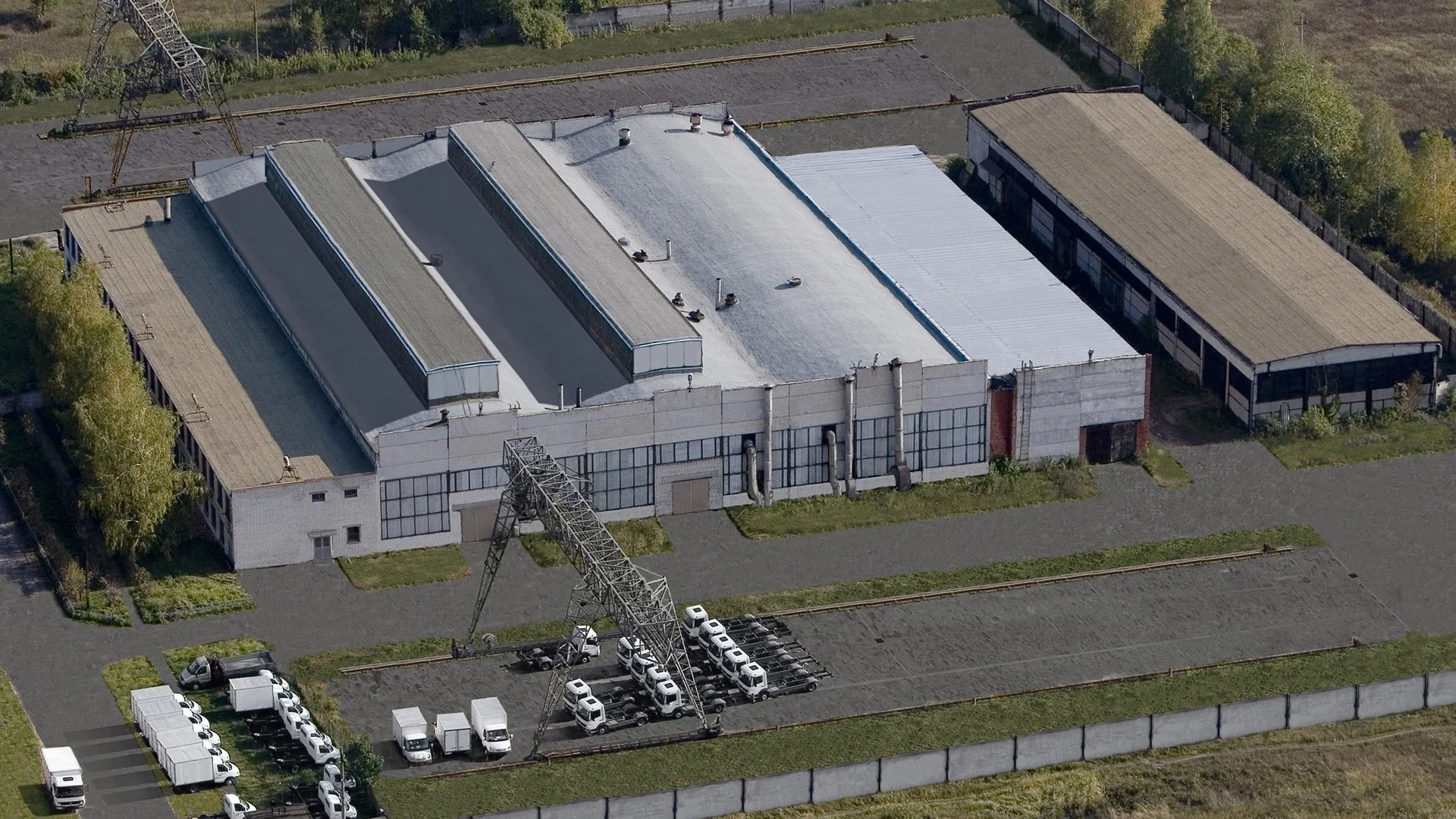
Built-up and modified bitumen systems are still common on older plant buildings in this area, and a lot of what we do is recover work over an existing BUR deck rather than a full tear-off, especially where a full tear-off would mean more disruption to operations than the plant wants to schedule right now.
Maintenance Programs That Track a Plant Calendar
A plant roof maintenance program only works if it respects how the plant actually operates. We build ours around a few fixed points:
- Inspection windows scheduled around planned outages instead of a generic calendar date
- Drone or visual inspection options for roof sections near equipment where foot access is restricted
- Documentation formatted for capital planning submissions, not only a punch list
- Coordination directly with the plant maintenance or reliability team rather than a separate point of contact
- Priority response terms for storm damage given how much industrial roofing sits along this coast
- Walkway pad additions at any route that shows repeated wear between visits
Storm Exposure on Top of Daily Wear
This part of Louisiana carries hurricane risk on top of everything a process environment already throws at a roof. Laura and Delta both put wind and water into industrial roofs across Calcasieu Parish, and a lot of plants are still running on repairs made in the years right after those storms. We factor wind uplift performance into every system recommendation here, and we keep an eye on fastening patterns and perimeter detailing on older roofs that were built to an older wind standard than what the area sees written into specs today.
Questions Plant Maintenance Teams Ask Us
Can you work inside our existing hot work permit and confined space program?
Yes. We go through whatever orientation and permit process the site requires and our crews work inside those rules on every visit, not only the first one.
Do you recommend PVC or TPO for areas near process equipment?
It depends on what is actually venting or draining near that section of roof. Where we see regular grease, oil, or chemical exposure we generally recommend PVC or KEE over standard TPO, and we will walk the specific area with your team before making that call.
Can roof work wait for our next turnaround?
For larger reroof or recover scopes, yes, and we plan around that timing whenever a plant prefers it. Active leaks or storm damage we handle on a faster timeline regardless of the outage calendar.
How do you document work for our capital planning process?
We provide photo documentation, section-by-section condition notes, and remaining service life estimates formatted to drop into a capital request rather than a loose field report.
Do your crews carry their own safety equipment for plant access?
Yes, our crews arrive with their own fall protection and PPE and complete whatever site-specific orientation is required before starting work.