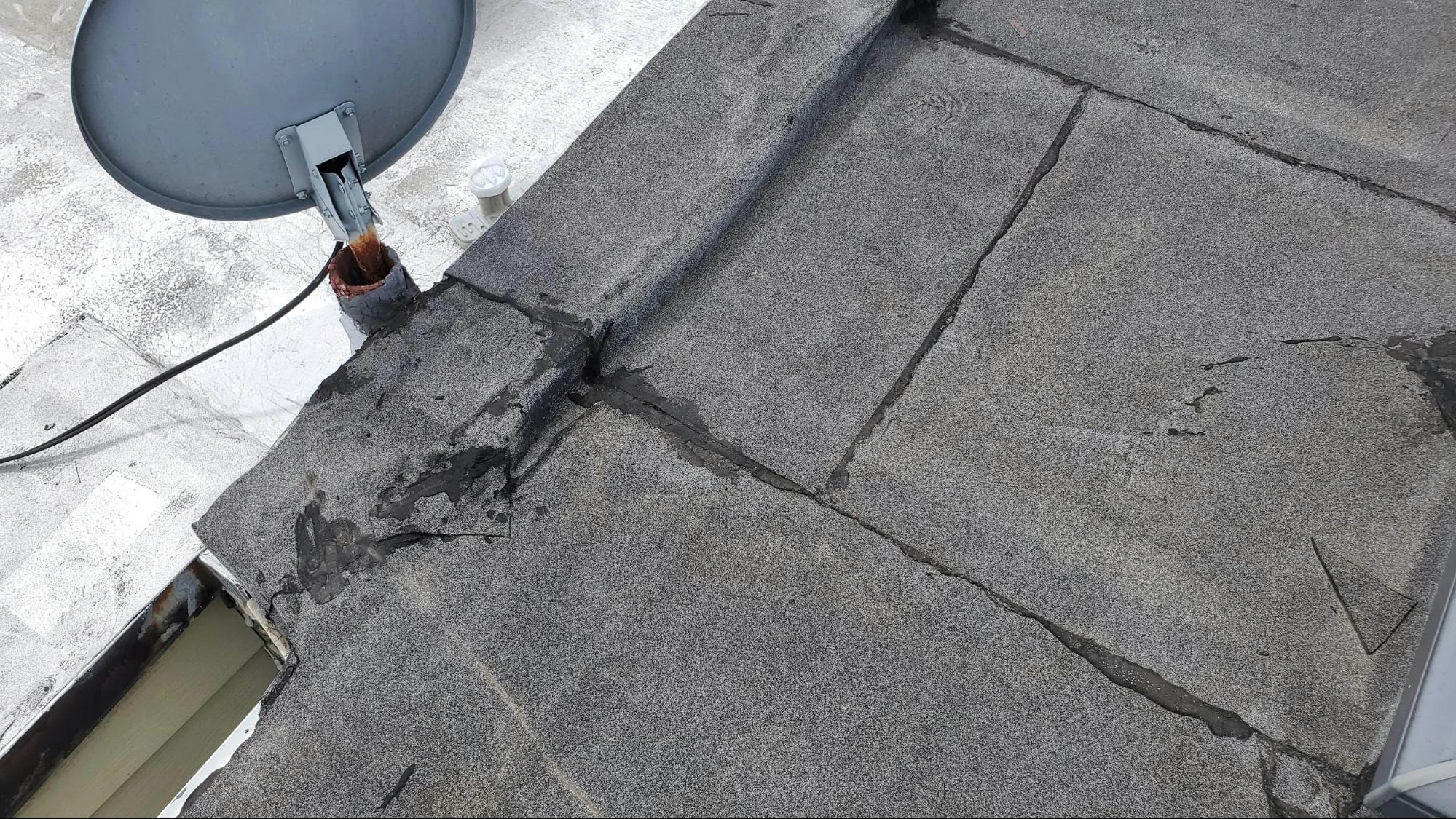
80 Mil TPO for High-Traffic and Higher-Wind Roofs in Lake Charles
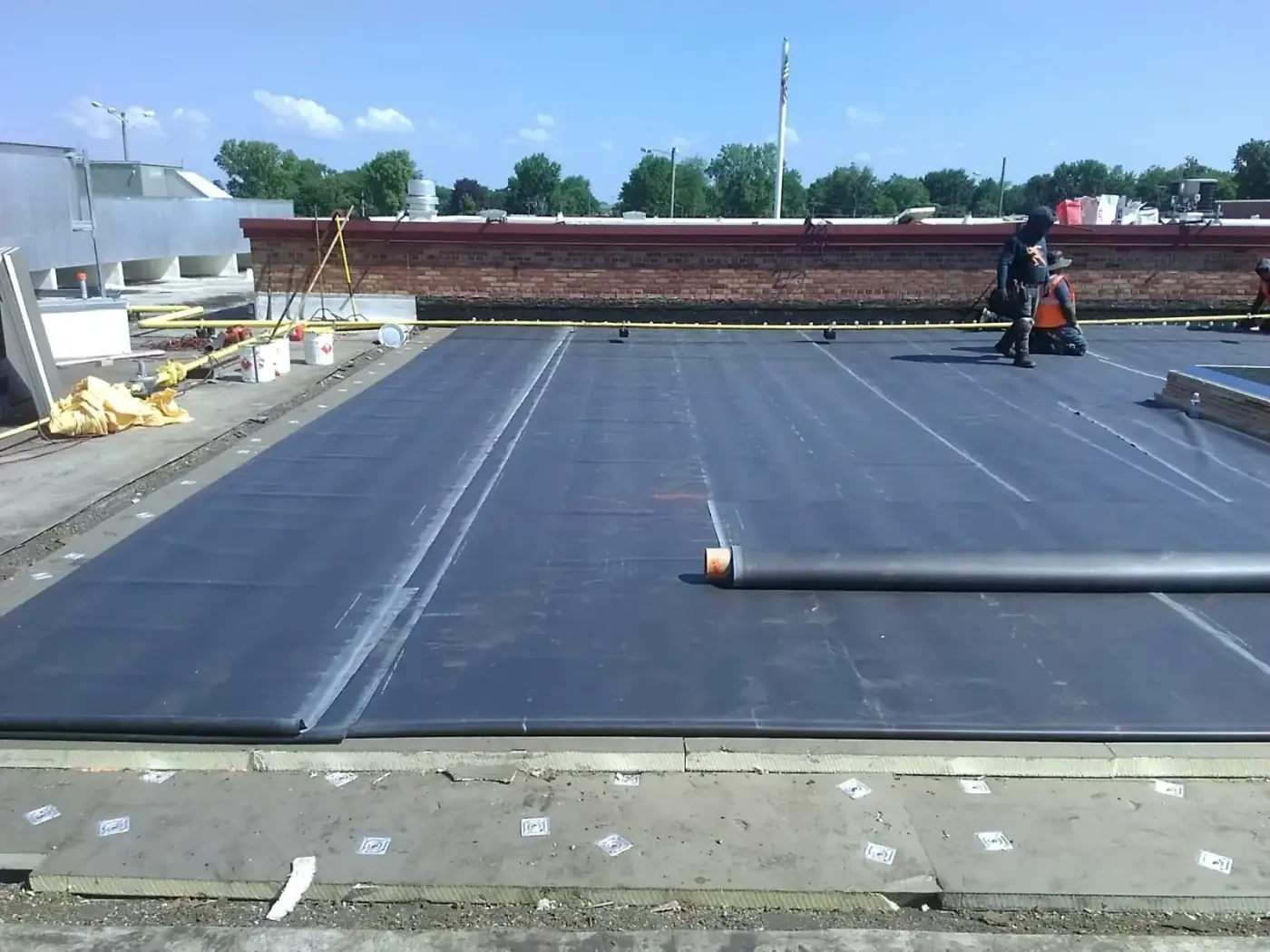
80 mil TPO is the thicker end of the single-ply lineup, and around the petrochemical corridor between Westlake and Sulphur, it's often the membrane the building actually calls for rather than an upgrade we're pitching. Heavier rooftop equipment, higher wind uplift requirements, and insurance carrier specs push a lot of industrial-adjacent roofs toward 80 mil before we even get to the estimate.
When 60 Mil Isn't Enough
The jump from 60 to 80 mil isn't about extra durability for its own sake. It's puncture resistance and membrane mass , real advantages on a roof that sees regular foot traffic from contractors, mechanical techs, and safety inspections tied to nearby plant operations. A membrane walked on weekly needs more mass than one that only sees an annual inspection.
We size membrane thickness to actual roof use, not building type alone. A distribution building with a quiet roof can often stay on 60 mil. The same building with rooftop conduit runs, satellite dishes, or frequent service access usually moves up to 80 mil, since the cost difference is smaller than the cost of an early recover.
FM Global and Insurance-Driven Specs Near the Plants
Industrial operators and their general contractors around Westlake, Sulphur, and Carlyss often work under FM Global property insurance requirements, and those requirements get specific about membrane thickness, fastening density, and cover board. We've priced enough of these jobs to know the carrier's wind and hail rating drives the spec more than personal preference does.
When a facilities team hands us an FM data sheet number instead of a membrane brand, our job is matching the assembly , deck type, insulation, cover board, membrane, and fastening pattern , to that rating, not substituting a similar-looking system and hoping it holds up to review.
Rooftop Traffic at Industrial and Flex Buildings
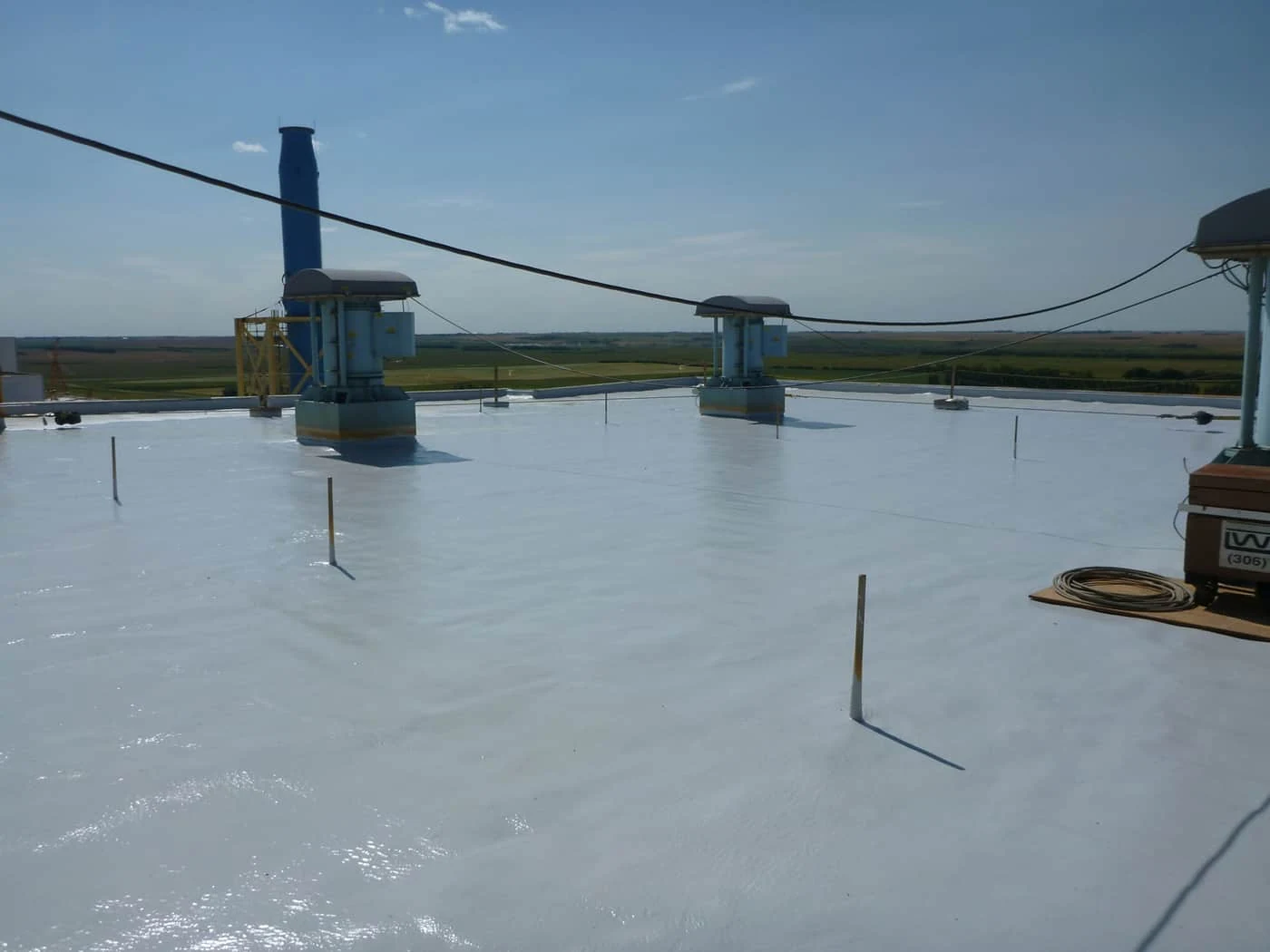
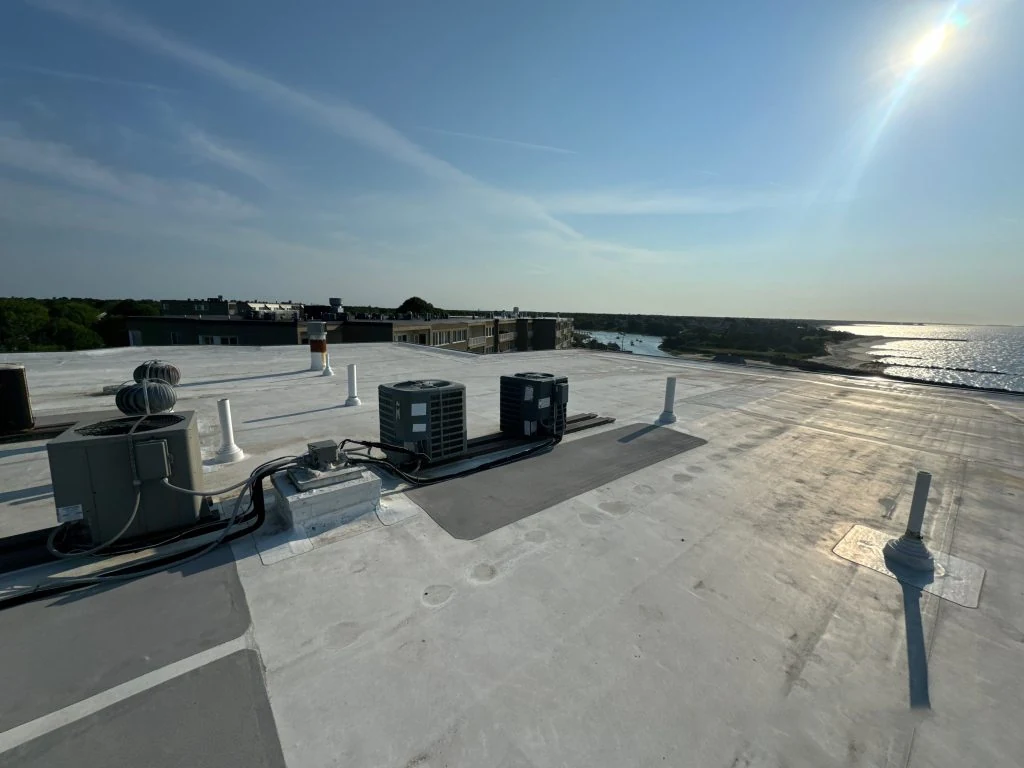
Flex and light-industrial buildings around the Lake Charles industrial corridor tend to carry more rooftop equipment than a typical retail box , exhaust fans, dust collection ductwork, conduit racks, sometimes temporary contractor equipment during turnaround work at nearby plants. That all means boots on the roof more often than the building owner usually expects.
80 mil membrane holds up better to that traffic pattern, but we also add walkway pads at established travel paths rather than relying on membrane thickness alone. A roof with defined walk paths keeps wear concentrated somewhere we can inspect and repair without opening up the whole field.
Fastening for Wind Uplift on Larger Roofs
On larger low-slope roofs, wind uplift performance comes down to more than membrane gauge. We look at:
- Fastening density in field, perimeter, and corner zones
- Cover board type and thickness under the membrane
- Deck attachment and deck type , steel, wood, or concrete
- Parapet height and roof edge geometry
- Existing penetrations that interrupt fastening patterns
- Local wind exposure category for the specific site
Two buildings a half mile apart can carry different wind exposure ratings depending on surrounding structures and terrain, so we calculate uplift for the specific roof rather than reusing a pattern from the last job.
We'll tell a building owner directly when 60 mil is the more sensible choice. 80 mil costs more, and there's no reason to spec it on a roof that doesn't need the added mass. See our 60 mil TPO page for the buildings where the lighter membrane is the better fit.
Comparing 80 Mil to Multi-Ply Alternatives
On some industrial buildings, the real comparison isn't 60 mil versus 80 mil TPO , it's single-ply versus a multi-ply system like modified bitumen. Both approaches can meet the same wind uplift and durability targets, but they get there differently.
80 mil TPO gets its added resilience from membrane mass and reinforced fastening. A multi-ply system gets similar resilience from redundant layers instead. For a roof with straightforward geometry and predictable traffic, we usually favor the single-ply route because installation is faster and warranty terms tend to be more standardized across manufacturers.
For a roof with heavier mechanical loads, frequent contractor access tied to plant turnaround schedules, or a documented history of puncture damage, we'll price both options side by side rather than assuming one system automatically wins on a facility with that kind of exposure.
Questions From Plant Managers and GCs
Does FM Global require 80 mil TPO on every industrial building?
No. The thickness requirement depends on the specific FM data sheet and wind or hail rating assigned to the site, not a blanket rule. Some industrial buildings qualify for 60 mil assemblies; others need the added mass and fastening density of 80 mil.
Can 80 mil TPO be installed over an existing built-up roof?
Sometimes, depending on the condition of the existing roof and deck. We check for wet insulation and structural condition first , a recover only makes sense over a roof that's actually dry and sound underneath.
How much does 80 mil add to project cost compared to 60 mil?
It varies by roof size and the fastening density required, but the material and labor difference is usually modest relative to the whole project. We price both thicknesses side by side when a building could reasonably go either way.
Do we need walkway pads even with 80 mil membrane?
Yes, on any roof with regular service traffic. Membrane thickness helps resist puncture, but walkway pads concentrate wear on a surface built for it and keep the rest of the field in better condition longer.
Is 80 mil TPO a substitute for a multi-ply system?
Sometimes, but not always. On roofs with heavy traffic or a puncture history, we compare single-ply and multi-ply options directly instead of assuming thicker membrane alone solves the underlying exposure problem.