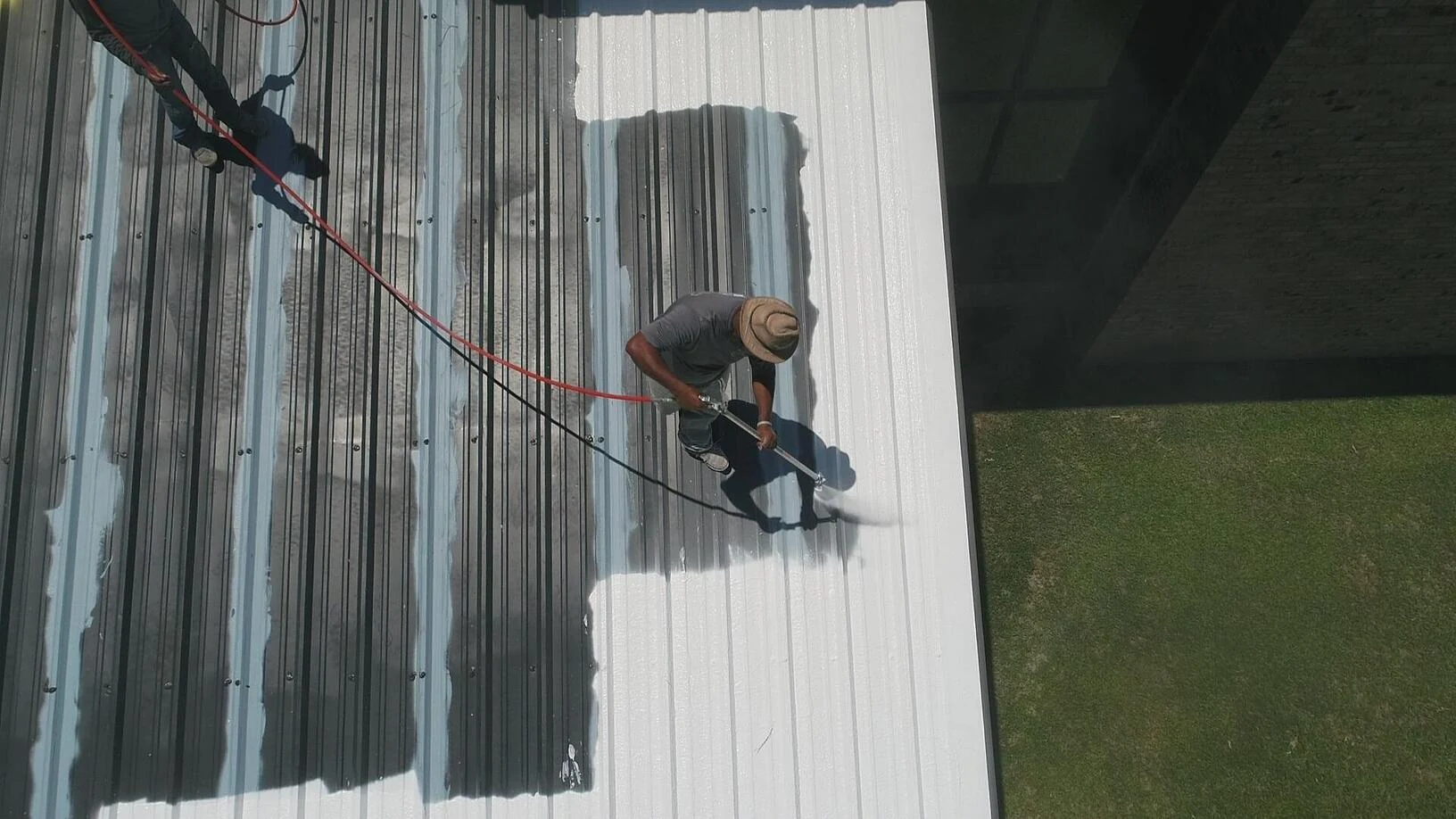
What It Actually Takes to Get a Commercial Roof Claim Paid in Full
Calcasieu Parish files more commercial roof insurance claims in a bad storm year than most metros see in a decade, and the roofs that come out of that process whole are almost never the ones with the loudest damage. They're the ones with the most complete paper trail. We're a roofing contractor, not a public adjuster: we inspect, document, and put a full repair scope in front of the carrier so the claim reflects the roof's actual condition, beyond only what's visible from the parking lot.
What a Commercial Roof Claim Actually Requires
A commercial roof claim lives or dies on documentation quality. Carriers process a high volume of files after any regional weather event, and an adjuster reviewing a stack of claims responds to specifics: measured damage areas, dated photos tied to a known event, and a written scope that ties each line item back to something they can see. A vague description of "storm damage" gets questioned. A section-by-section report with photos, measurements, and moisture readings usually doesn't.
Building type matters here too. A single-tenant retail box with one membrane and a handful of penetrations documents differently than a multi-section plant roof along the Westlake or Sulphur corridor with a mix of TPO, standing seam, and older built-up sections patched over decades. We scope the documentation to match the roof, not the other way around.
Damage Documentation That Holds Up
Photos alone rarely carry a claim. We pair wide reference shots that show where damage sits relative to the roof plan with close-ups of each failure point, then add measurements so the affected square footage isn't left to guesswork. Where wind or wind-driven rain has pushed water past the membrane, we take moisture readings across the insulation, since wet insulation under an otherwise intact membrane is easy to miss on a surface walk and easy to dispute later if it isn't documented at the time.
We also note roof condition beyond the immediate damage, prior patch work, drainage performance, membrane age, because a report that only shows the damage and skips everything else tends to draw more questions from a carrier than one that gives the full picture up front.
Meeting the Adjuster on the Roof
When the assigned adjuster schedules a site visit, we walk the roof with them. That means pointing out damage that isn't obvious from the access hatch, explaining how a specific roof system fails under wind uplift or hail impact, and answering technical questions about the roof assembly on the spot rather than after the fact. We don't negotiate coverage or argue the claim's merits, that's between the owner and their carrier, but we make sure the adjuster sees the roof the way our inspection saw it.
Framing the Complete Scope
The most common way a commercial roof claim comes up short isn't a denied claim, it's an underscoped one. A carrier's initial estimate often prices a patch repair on damage that, once you account for current code requirements, matching materials, and the roof's actual remaining service life, calls for a full section replacement or reroof. We itemize the complete scope, including code-mandated upgrades like insulation thickness or edge metal detailing that wouldn't apply to a like-for-like patch, so the claim reflects the real cost of putting the roof back in proper working condition rather than the smallest fix that technically covers the hole.
That's not about inflating a number. It's making sure nothing legitimate gets left off the estimate because nobody documented it.
When a Claim Comes Back Denied or Underpaid
Denials and underpayments usually trace back to one of a few things: damage attributed to wear rather than the storm event, a scope that didn't capture the full extent of what needs repair, or missing documentation tying the damage to a specific date. When an owner comes to us after an initial denial or a lowball estimate, we re-inspect and produce a fuller report addressing exactly those gaps, additional photos, more precise measurements, a clearer written case for what the storm caused versus what was already there. We hand that report to the owner to bring back to their carrier or public adjuster. We don't fight the insurer directly, but a stronger, more specific report is often what moves a stalled claim forward.
Repair Versus Full Replacement
Not every covered loss needs a full reroof, and not every claim should end at a patch. We give owners a straightforward read based on the roof's age, remaining service life, and how much of the roof the damage actually affects, then document that reasoning as part of the claim file so the recommendation has evidence behind it, not only our word against a carrier's initial number.
- Full roof walk documenting damage, not only the reported problem area
- Wide and close-up photos with measurements for every affected section
- Moisture readings anywhere water reached the insulation or deck
- Written scope covering code-required upgrades alongside the repair itself
- On-roof meeting with the assigned adjuster to walk the damage together
- Re-inspection and supplemental report if a claim is denied or underpaid
Commercial Roof Insurance Claim Questions
Does insurance cover a full commercial roof replacement?
It depends on the policy and the extent of the covered damage. When damage is widespread enough, or when code requires bringing the whole roof up to current standards during repair, a full replacement can be the correct outcome. We document the roof's actual condition so that determination is based on real findings, not a guess.
What's the general claim process for a commercial roof?
Typically it starts with reporting the loss to the carrier, then an inspection, either the carrier's adjuster, a public adjuster the owner hires, or both, walks the roof. We inspect first, document everything, and are available to meet whichever adjuster is assigned so our findings and theirs are working from the same information.
What happens if my claim gets denied?
A denial isn't always final. We re-inspect and look specifically at what the denial cited, then build a more thorough report addressing those points, additional documentation, clearer photos, more precise measurements, for the owner to bring back to their carrier or a public adjuster.
Should I repair or replace after a covered loss?
That depends on the roof's age, remaining life, and how much of it the covered event actually damaged. We walk owners through that assessment directly and document the reasoning as part of the claim file.
Do you file or negotiate the claim for me?
No. We're a roofing contractor, not a public adjuster or attorney. We inspect the roof, document the damage, and produce a scope the owner can bring to their carrier or their own public adjuster. Filing and negotiating the claim itself is between the owner and their insurance company.
How long does a commercial roof claim typically take?
It varies with claim volume in the region and the complexity of the roof. A single-building claim outside of a major regional event can move in a few weeks. After a widespread storm, when carriers are working through a large backlog, thorough documentation up front tends to shorten the process rather than lengthen it.