Johns Manville Roofing Systems for Multi-Ply and Single-Ply Reroofs
Johns Manville built its roofing reputation on asphalt-based systems, and that heritage still shows in the depth of their modified bitumen and built-up roofing product lines , options that matter on the older, multi-layer roof replacements we run into around Lake Charles regularly.
A Manufacturer Rooted in Asphalt Roofing
A lot of older commercial buildings around Lake Charles started with built-up asphalt roofs, and when those roofs finally reach end of life, a modified bitumen replacement from a manufacturer with a long asphalt-roofing history gives us product depth to work with , multiple base sheet and cap sheet options, different application methods, and accessory components built for asphalt-based systems specifically.
That history doesn't mean we default to modified bitumen on every JM job. Johns Manville also makes single-ply TPO and PVC, and we spec whichever line fits the building rather than assuming an asphalt-heritage manufacturer only makes sense for asphalt-based systems.
DynaWeld and Torch-Free Modified Bitumen Options
Johns Manville's DynaWeld line uses a heat-activated backing that bonds without an open torch flame, which matters on buildings near fuel storage, plant boundaries, or anywhere open flame raises a legitimate safety concern. Around Sulphur and Westlake, that torch-free option comes up in almost every modified bitumen conversation.
The trade-off is installation speed , torch-free application generally takes more time than open-flame torching , but for a roof near industrial operations, the added labor time is a reasonable cost for removing open flame from the job site entirely.
Single-Ply Lines for Buildings That Don't Need Multi-Ply
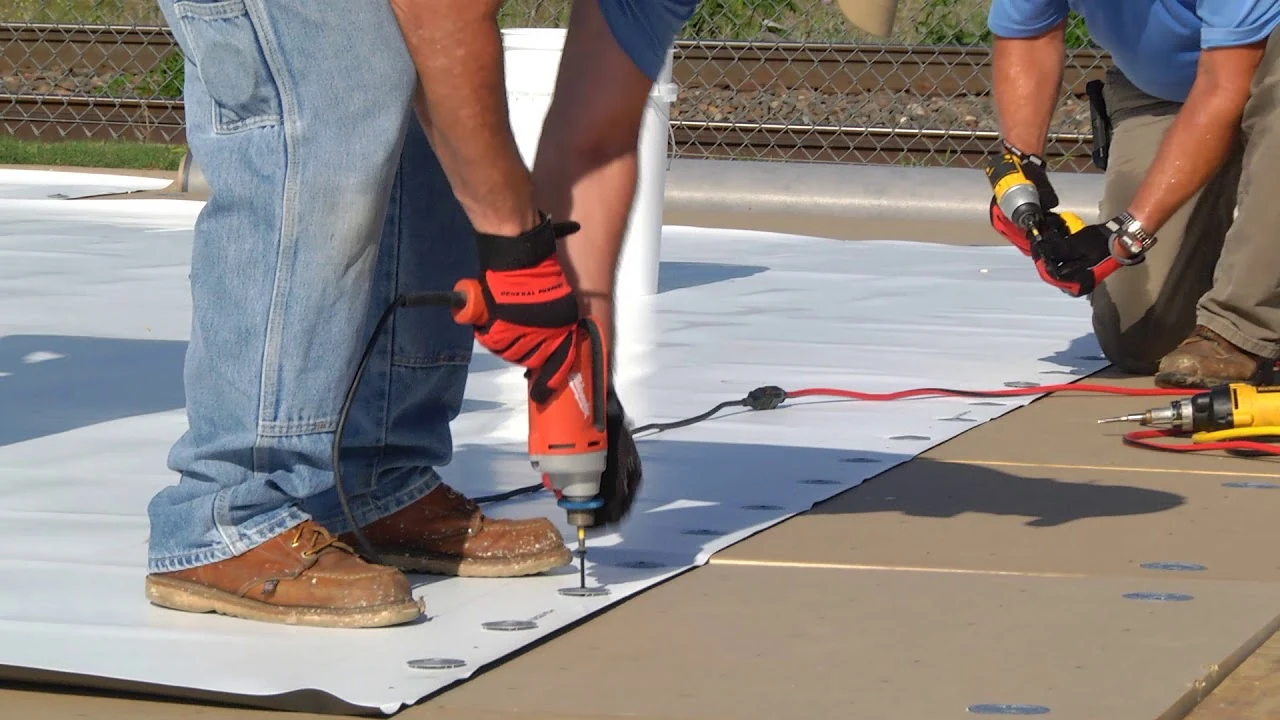
For buildings that don't need multi-ply redundancy , a straightforward warehouse or retail box with simple roof geometry , Johns Manville's single-ply TPO covers the same thickness and fastening options as other manufacturers' lines, evaluated against the building's actual exposure rather than a blanket preference for one product family.
We look at roof complexity, traffic, and wind exposure the same way regardless of which manufacturer we end up specifying, and JM's single-ply options compete on those same terms against Carlisle, GAF, or Versico depending on the specific roof.
What We Confirm Before Specifying JM Products
Before finalizing a Johns Manville spec, we confirm:
- Whether torch-free DynaWeld application is required by site conditions
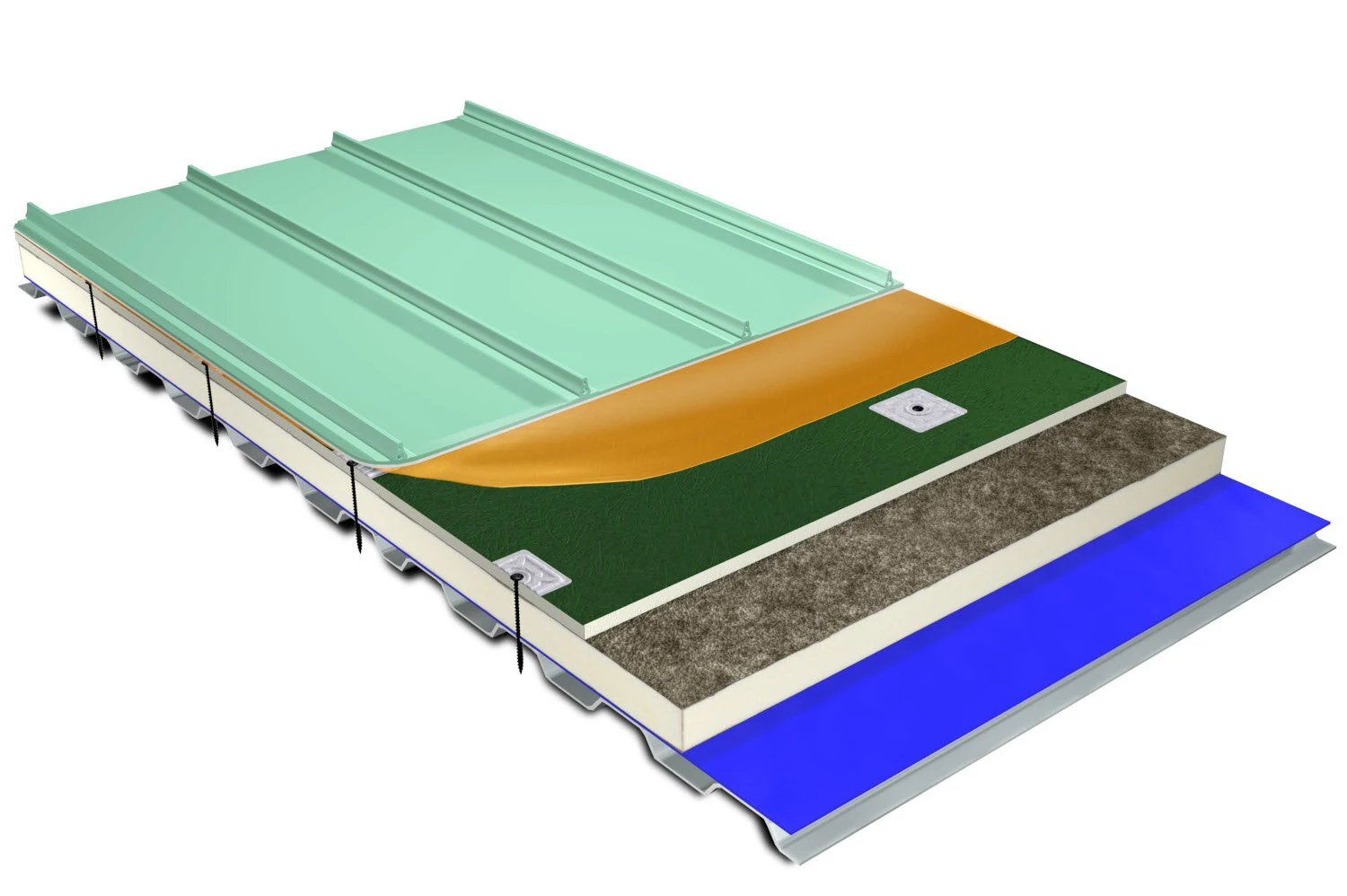
- Base sheet and cap sheet compatibility across the full assembly
- Insulation and cover board match the fastening pattern for wind rating
- Flashing details at parapets, penthouses, and roof transitions
- Whether the existing roof deck can support a multi-ply system's added weight
That last point matters more than owners expect , an older deck sized for a single-ply membrane doesn't always carry the additional weight of a multi-ply modified bitumen system without review.
Cover Board and Insulation Options
Johns Manville's insulation and cover board line matters as much to a roof's performance as the membrane itself, particularly on a modified bitumen assembly where the cover board affects how the base sheet bonds and how the finished roof handles foot traffic and hail impact.
For buildings near the industrial corridor with rooftop equipment traffic, we often spec a denser cover board than a straightforward retail or office roof would need. That added density resists compression under repeated equipment and foot traffic better than a standard board, which keeps the membrane above it from telegraphing damage from below.
Insulation thickness gets checked against current energy code requirements on every reroof, rather than only matched to whatever was there before. A building reroofed today often needs more insulation than it had originally, and Johns Manville's polyiso line gives us the range of thicknesses needed to close that gap without redesigning the whole roof assembly.
On a tapered insulation system, cover board selection also affects how well the roof drains over time. A cover board that compresses unevenly under load can create low spots that weren't there at installation, so we check compressive strength ratings against expected roof traffic before settling on a specific product within Johns Manville's line.
We document insulation and cover board thickness at every point on the roof, particularly on tapered systems where thickness varies by design. That record matters later if a leak shows up and someone needs to know what's actually built into the roof assembly without cutting it open to check.
Johns Manville Questions From Building Owners
Is torch-free modified bitumen as durable as torch-applied?
Properly installed, torch-free DynaWeld performs comparably to torch-applied modified bitumen. The main difference is installation method and job-site fire safety, not long-term membrane durability.
Does Johns Manville make single-ply membrane, or only asphalt-based systems?
Both. Johns Manville manufactures single-ply TPO and PVC alongside its modified bitumen and built-up roofing lines, so building type doesn't limit us to one product family.
Can an older built-up roof deck support a new modified bitumen system?
Not always without review. Multi-ply systems add weight that some older decks weren't sized for, so we check structural capacity before finalizing a multi-ply spec.
Why choose modified bitumen over TPO for a reroof?
Multi-ply redundancy and puncture resistance are the main reasons, particularly on roofs with heavy traffic or complex geometry. For a simple, low-traffic roof, single-ply TPO is often the more economical choice.
Does a reroof always need more insulation than the original roof had?
Often, yes, since energy code requirements have generally increased over time. We check current code requirements against the existing roof assembly on every reroof rather than matching the old insulation thickness by default.