Apartment Roofs Under Pressure From a Housing Market That Never Fully Recovered
Laura and Delta damaged or destroyed a meaningful share of this region's apartment stock, and the years since have seen steady demand from workforce housing tied to LNG and refinery construction crews on top of the area's normal rental population. Complexes that got rushed reroofs right after the storms are now the ones calling us back, and owners bringing older garden-style properties up to a standard that can handle both tenants and the next storm are asking harder questions about materials than they were in 2021.
Garden-Style Buildings and What's Actually on Top of Them
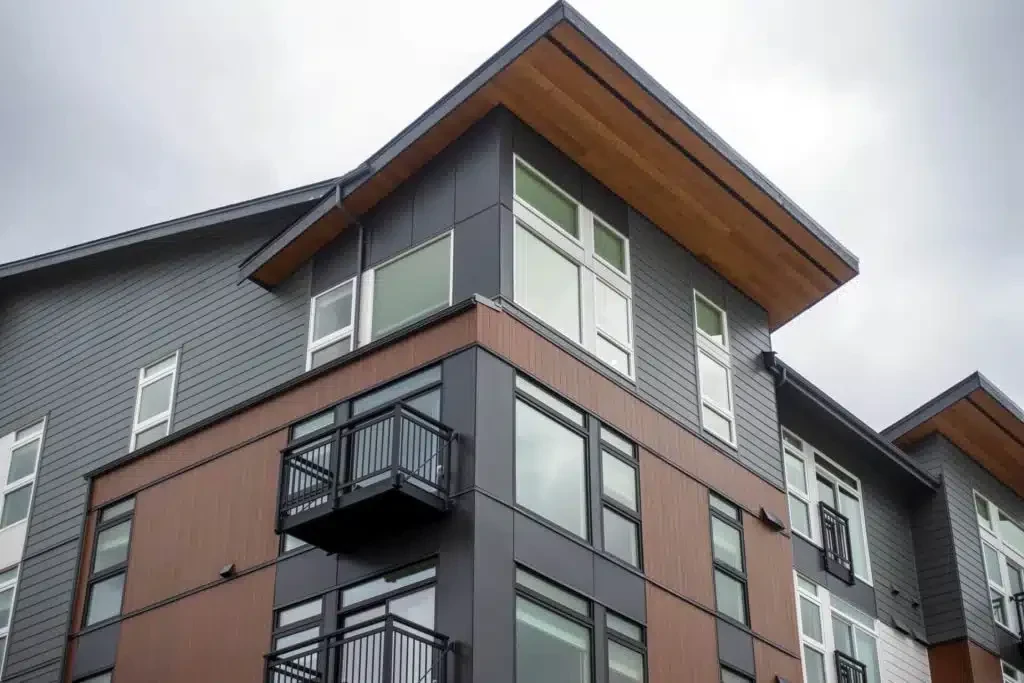
Most multifamily properties here are two- and three-story garden-style buildings with architectural shingle roofs over the residential structures and a separate low-slope membrane roof over the clubhouse, leasing office or covered parking structure if the property has one. Those two roof types age on different timelines and get inspected on different schedules, and it's common for an owner to have a recent shingle replacement on the residential buildings while the clubhouse roof, which nobody's watching as closely, is quietly failing.
We inspect both roof types as part of a full property walk rather than assuming a recent residential reroof means the whole property's covered.
Roofing Over Tenants Who Live There
Reroofing an occupied apartment building means working above tenants' homes and personal property, and that changes the job in ways a vacant commercial building doesn't require. We coordinate move schedules with property management, protect balconies and patios during tear-off, and sequence buildings so residents get advance notice rather than waking up to a crew on their roof. Noise ordinances, parking for material staging, and tenant complaint response all become part of the project plan, not an afterthought handled by the property manager alone.
Insurance Documentation Across Multiple Buildings
A garden-style complex might have six, ten or twenty separate roof structures, and after a storm, each one needs its own documented damage assessment even if the whole property is covered under a single claim. We document damage building by building with dated photos and specific descriptions of what we find, which gives property owners and their adjusters a clear record instead of one vague summary covering a property with a dozen different roof conditions. We describe what we observe factually; we don't speak to what a claim will or won't be approved for, since that determination sits with the insurer and adjuster.
Bringing Older Properties Up to Current Wind Standards
A lot of apartment stock here predates the current understanding of what this coast's wind events actually do to shingle and flashing attachment. When we're asked to reroof an older garden-style building, we look at whether the existing deck, underlayment and fastening pattern meet a standard that reflects Laura and Delta, not only the code the building was originally built under. That's a conversation about upfront cost versus what the next storm does to a substandard reroof, and we lay it out plainly rather than defaulting to the cheapest matching repair.
Tracking Roof Age Across a Multi-Property Portfolio
Property management companies operating several apartment complexes across this region are often juggling buildings on completely different roofing timelines , one property fully reroofed after Laura, another still on the original pre-storm shingles because it took less direct damage. We keep condition records by building and by property so an ownership group managing multiple complexes can see where the next capital expense is actually coming due, rather than treating every property the same way based on when the portfolio as a whole was last touched.
That kind of tracking matters more here than in a market that hasn't been through two direct hurricane hits in three months, since roof age and storm history don't always line up the way an owner assumes. A property that looks fine from the parking lot can still be carrying a roof that's older and more vulnerable than the building next to it.
- Architectural shingle roofing over garden-style residential buildings
- Low-slope membrane roofing over clubhouse and leasing office structures
- Covered parking structure roofing where present
- Building-by-building storm damage documentation for multi-structure claims
- Tenant-coordinated scheduling and access planning
- Balcony and patio protection during tear-off
Questions Property Owners and Managers Ask Us
Can you reroof a building with tenants still living in it?
Yes, that's the normal situation for multifamily work. We coordinate scheduling and notice with property management and protect tenant balconies and patios through the process.
Do you inspect every building in a complex or just a sample?
We walk every roof structure on the property, since garden-style complexes often have buildings on different reroofing histories. A sample inspection can miss the one building that's actually in trouble.
Can you document storm damage separately for each building for our insurance claim?
Yes, we provide building-by-building documentation with dated photos and specific findings. We describe what we observe; we don't determine claim eligibility, which is between you and your insurer.
Is our older shingle roofing actually rated for storms like Laura?
Depends on the building's age and original installation. We evaluate deck, underlayment and fastening pattern against current wind standards during inspection rather than assuming the original code is still adequate.
How do you handle noise complaints from tenants during a reroof?
We give property management advance notice by building so residents can be informed before work starts, and we sequence loud phases like tear-off during the hours that generate the fewest complaints.