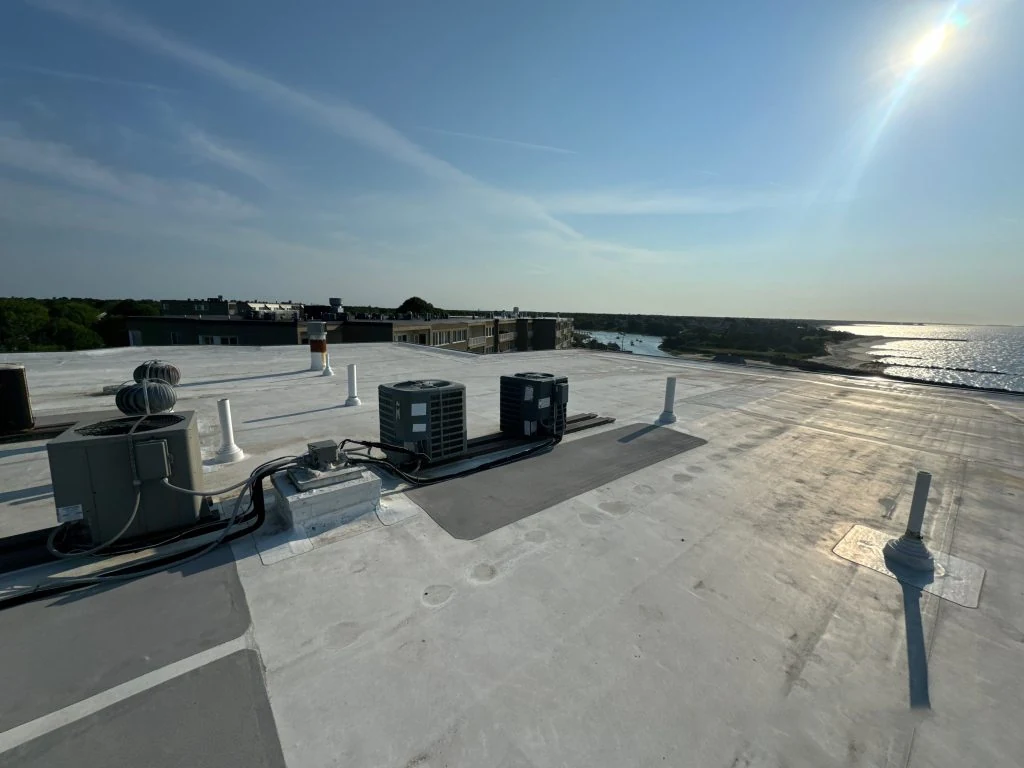
Black EPDM Roofing on Lake Charles's Older Commercial Buildings
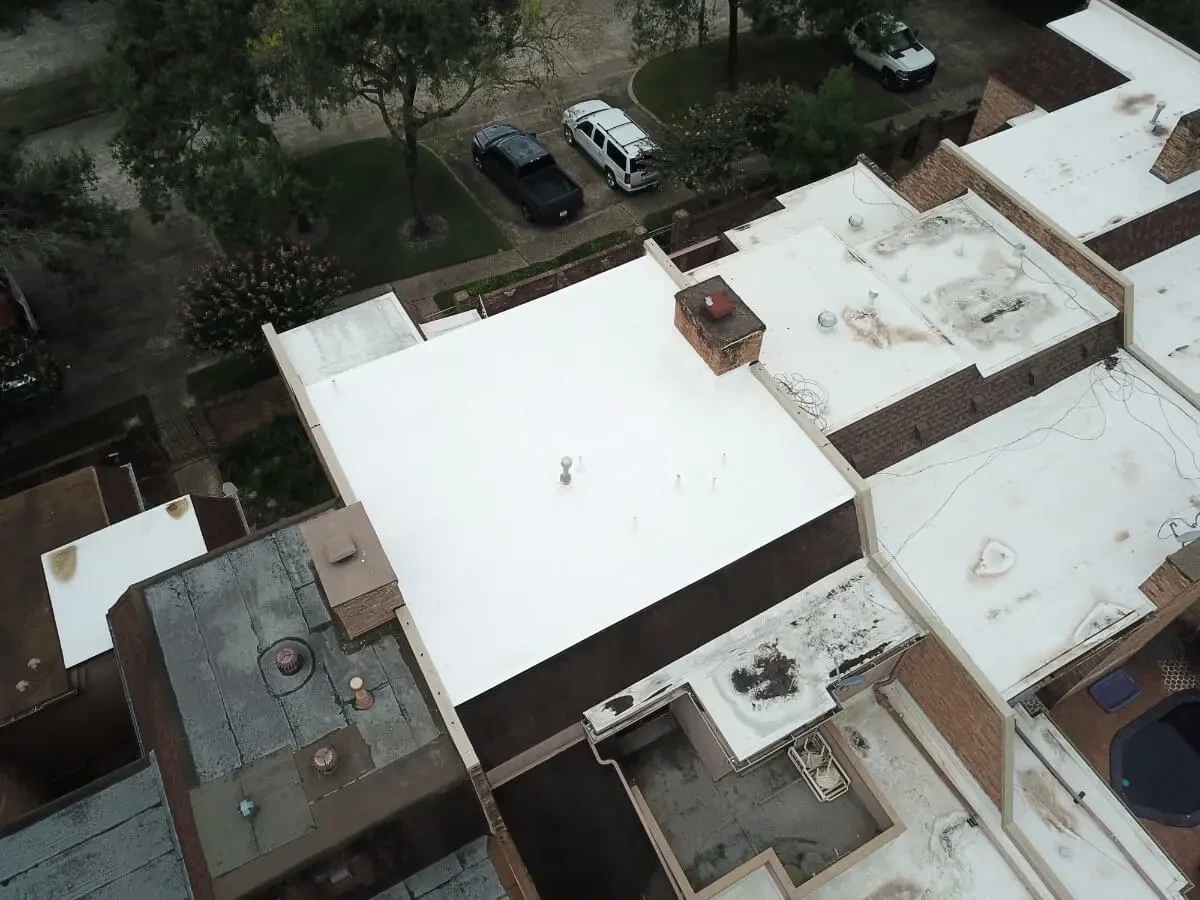
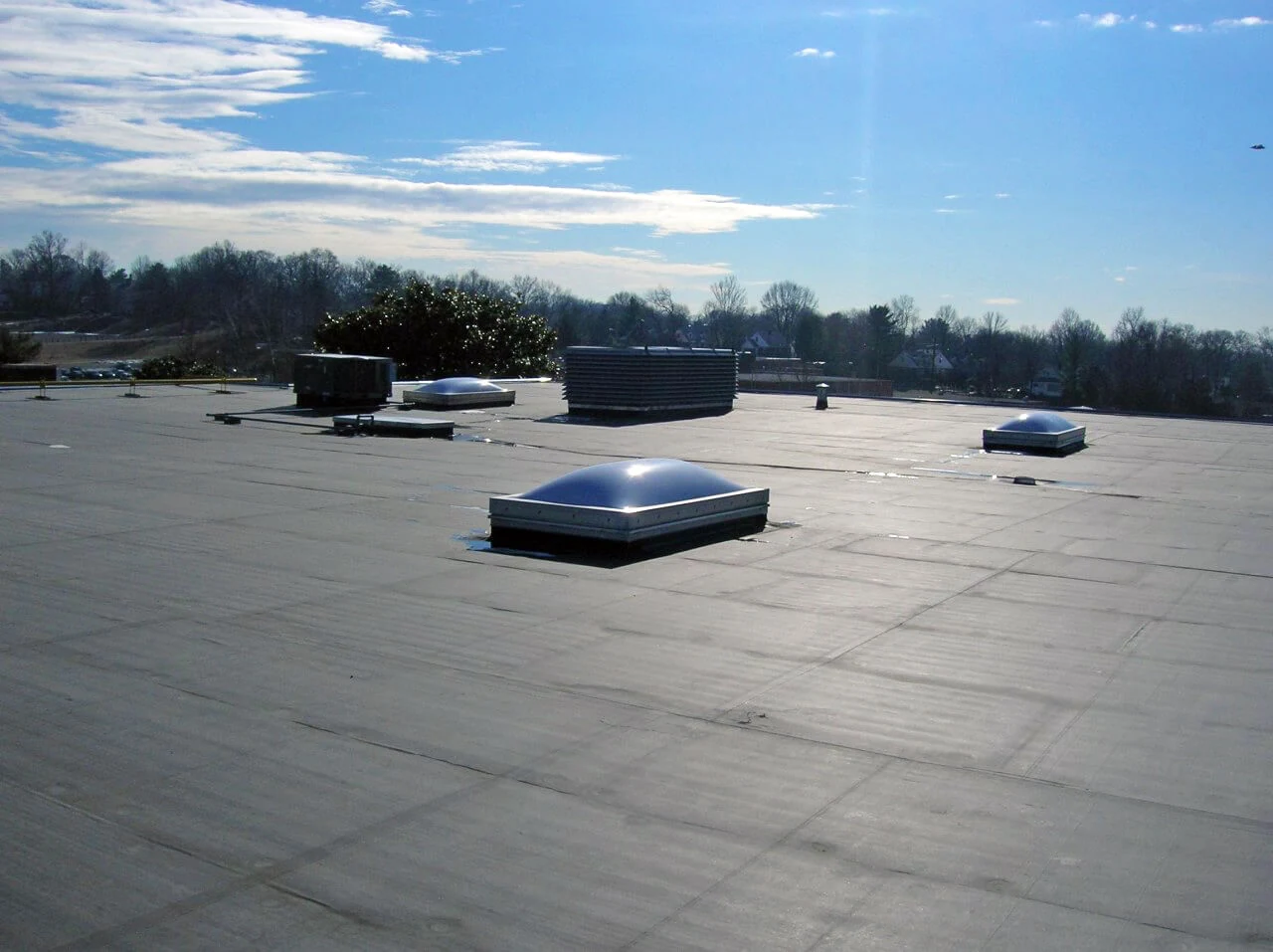
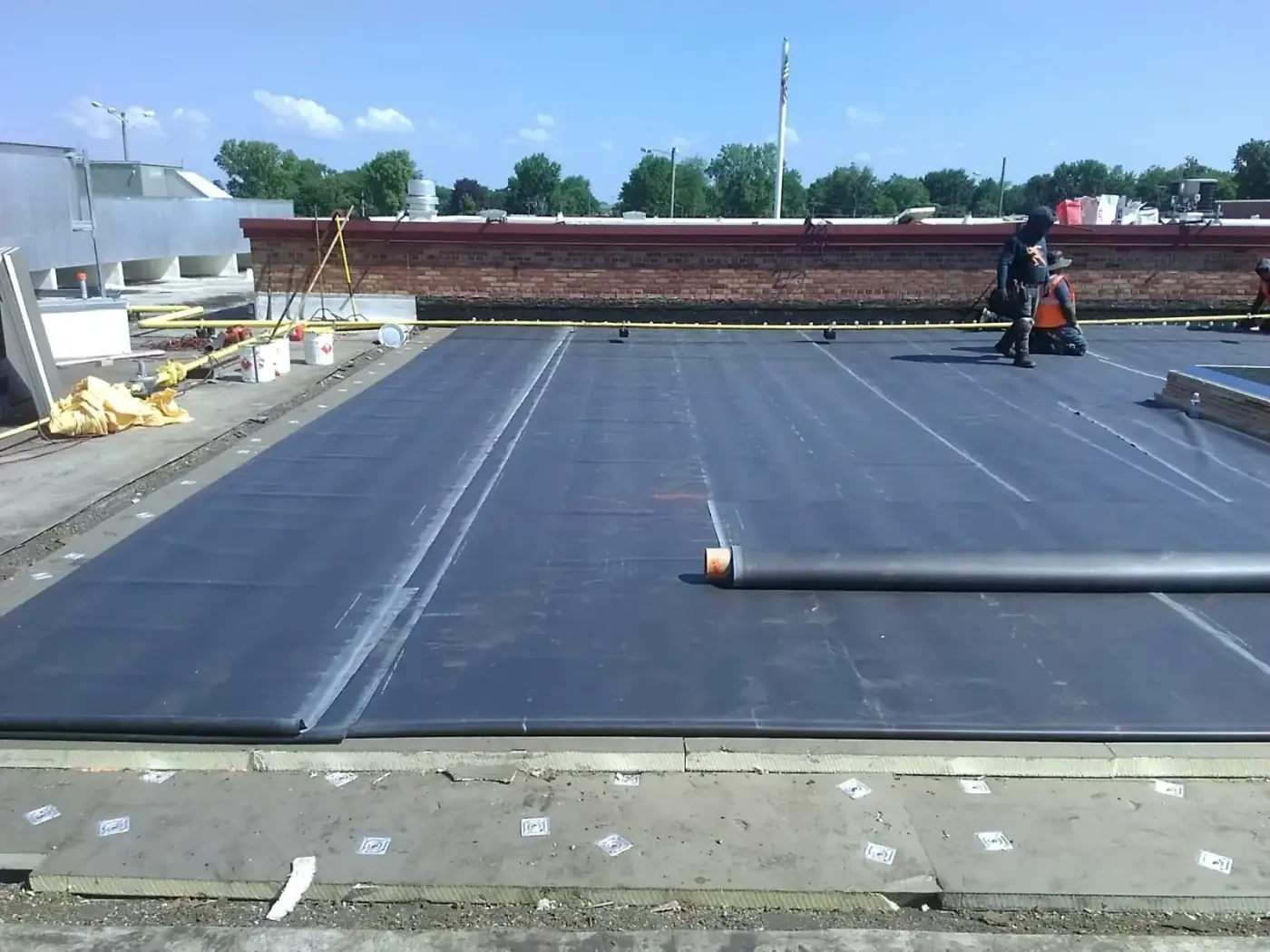
Black EPDM has been on commercial roofs around Lake Charles longer than almost any other single-ply membrane, and a lot of it is still up there , on downtown offices, older strip centers, and buildings that went up before TPO became the default spec. It's a rubber membrane with real strengths, and a few limits worth knowing before we recommend it again.
Why So Many Older Roofs Around Here Are Still EPDM
EPDM's biggest advantage is how it handles building movement. Rubber stretches and recovers instead of cracking, which matters on older decks that have settled or on buildings with expansion joints that move more than a newer structure. We see this on a number of downtown Lake Charles buildings near the civic center and casino district, where the roof deck has decades of settling behind it.
Cost is the other reason black EPDM keeps showing up on estimates. Material cost per square is usually lower than TPO or PVC, and for a straightforward low-slope roof with simple geometry, that difference adds up fast on a large roof area.
Ponding Water and Membrane Movement
Ponding water doesn't damage EPDM the way it degrades some coatings or adhesives , rubber tolerates standing water better than most systems. That's a real advantage on older roofs where drainage was never corrected and probably won't be as part of a reroof budget.
That tolerance can also hide a drainage problem instead of forcing a fix. We still flag persistent ponding areas in our inspection notes even when the membrane is holding up fine, because standing water adds dead load and accelerates debris buildup that eventually affects drains and scuppers.
Seam Tape Aging in Gulf Humidity
The weak point on an EPDM roof is almost never the field membrane , it's the seams. Gulf humidity and long stretches of summer heat push seam tape and adhesive to age faster here than in a drier climate, and older tape formulations age worse than current ones.
On every EPDM inspection, we spend more time at seams, flashings, and penetrations than on the open field. A lifting seam edge or a chalky, brittle tape line is usually the first sign of trouble, well before the membrane itself shows any wear.
Where Black EPDM Doesn't Belong
Black EPDM isn't the right membrane everywhere. Around the industrial corridor toward Westlake and Sulphur, airborne oils and chemical fallout from nearby plant operations can degrade rubber faster than a synthetic membrane. We generally steer those buildings toward PVC or coated systems instead.
- Buildings within the direct fallout path of plant flaring or process exhaust
- Restaurants with heavy roof-level grease exhaust
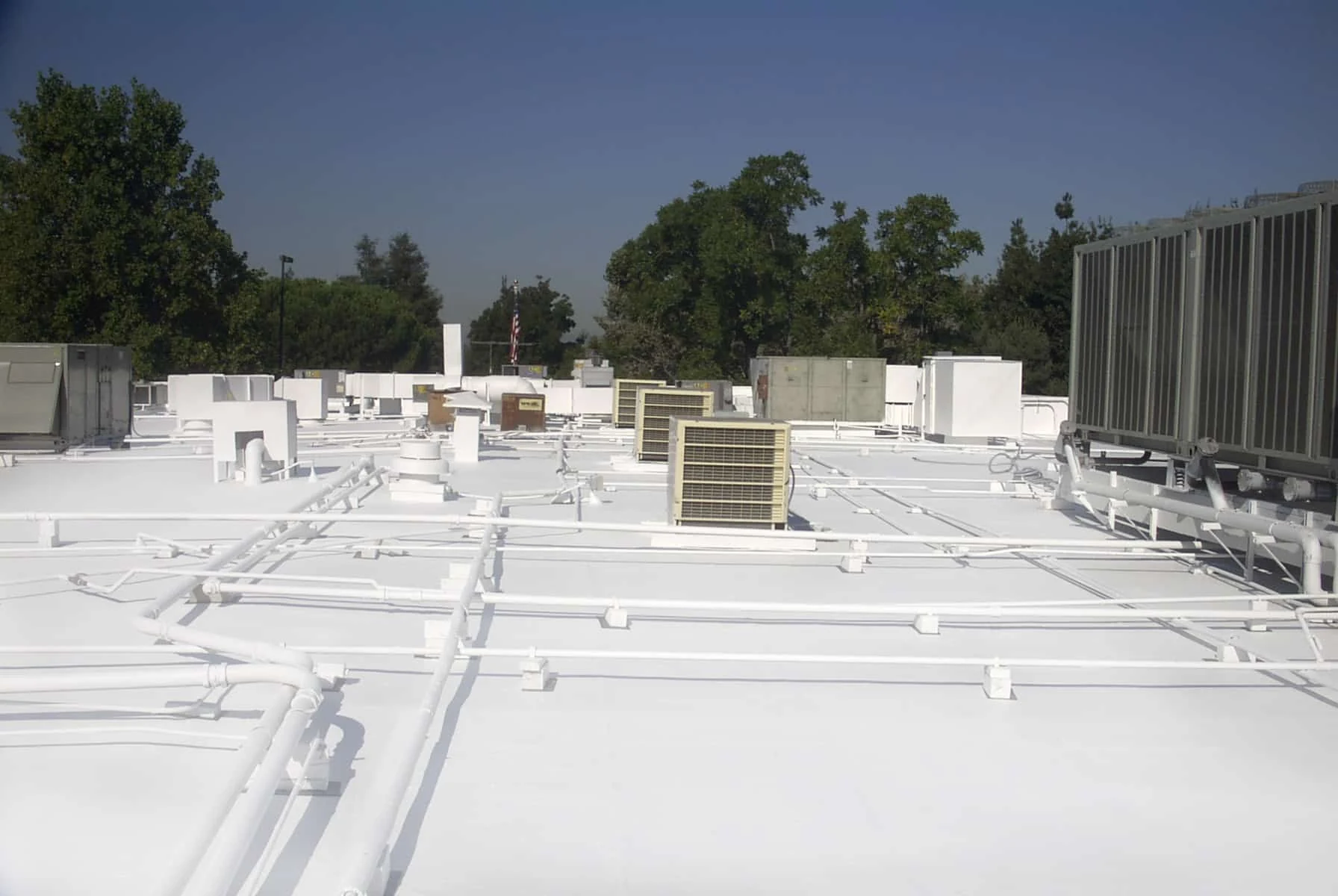
- Roofs needing a reflective surface for cooling load reasons
- Buildings under a fire-rated assembly requiring a specific membrane class
- Roofs where a previous coating has already been applied over EPDM incorrectly
For a downtown office or a quiet retail building away from industrial exposure, black EPDM remains one of the more cost-effective, long-lived options we install.
Repair vs Replacement Timing
The decision to repair versus replace an older black EPDM roof usually comes down to seam condition more than membrane condition. A roof with a handful of isolated seam failures and otherwise sound field membrane is a good repair candidate. A roof with widespread seam lifting across multiple runs is telling us the adhesive system has reached the end of its useful life everywhere at once, not only where we happen to be standing.
We also weigh the building's remaining ownership horizon into that decision. An owner planning to hold a property for another two or three years may reasonably choose targeted seam repair over full replacement, even knowing another repair round is likely. An owner planning a longer hold, or one already dealing with interior damage, is usually better served by replacement.
What we won't do is patch a roof that's clearly failing structurally just to defer the conversation. If wet insulation is spreading or the deck is showing signs of deterioration under repeated leaks, we say so plainly rather than proposing another round of spot repairs.
What Building Owners Ask Before Choosing EPDM
Is black EPDM a bad choice because of Lake Charles heat?
Not automatically. Black membrane runs hotter than white membrane in direct sun, which matters more for cooling load than for the membrane's own durability. On a well-insulated building without heat-sensitive tenant space, that difference is usually a minor factor.
How long do EPDM seams typically last here before needing attention?
It depends heavily on installation quality and tape generation, but we start checking seams closely well before the membrane's expected end of life, since seams age faster than the field membrane in this humidity.
Can black EPDM be coated instead of replaced?
Often, yes, if the membrane is dry underneath and structurally sound. A coating can extend service life at a lower cost than full replacement, though we still check for wet insulation before recommending that route.
Does EPDM handle hurricane wind uplift as well as TPO?
With the right fastening pattern and attachment method, EPDM can meet the same wind uplift targets as TPO. Fully adhered EPDM in particular performs well in higher exposure locations.
How do you decide between spot seam repair and full replacement?
We look at how widespread the seam failures are and how much useful life is left in the field membrane. Isolated failures usually mean repair; failures spread across most seam runs usually mean the adhesive system is done, and replacement makes more sense.