Why PVC Wins the Argument Near a Refinery Fence Line
Most membrane decisions in Lake Charles come down to cost and heat performance, but PVC gets picked for a different reason on a lot of the buildings we work on: what is actually in the air around the roof. Plant support buildings near Westlake, Sulphur, and the ship channel deal with chemical and hydrocarbon exposure that other membranes are not built to resist as well.
What Makes PVC Different From TPO
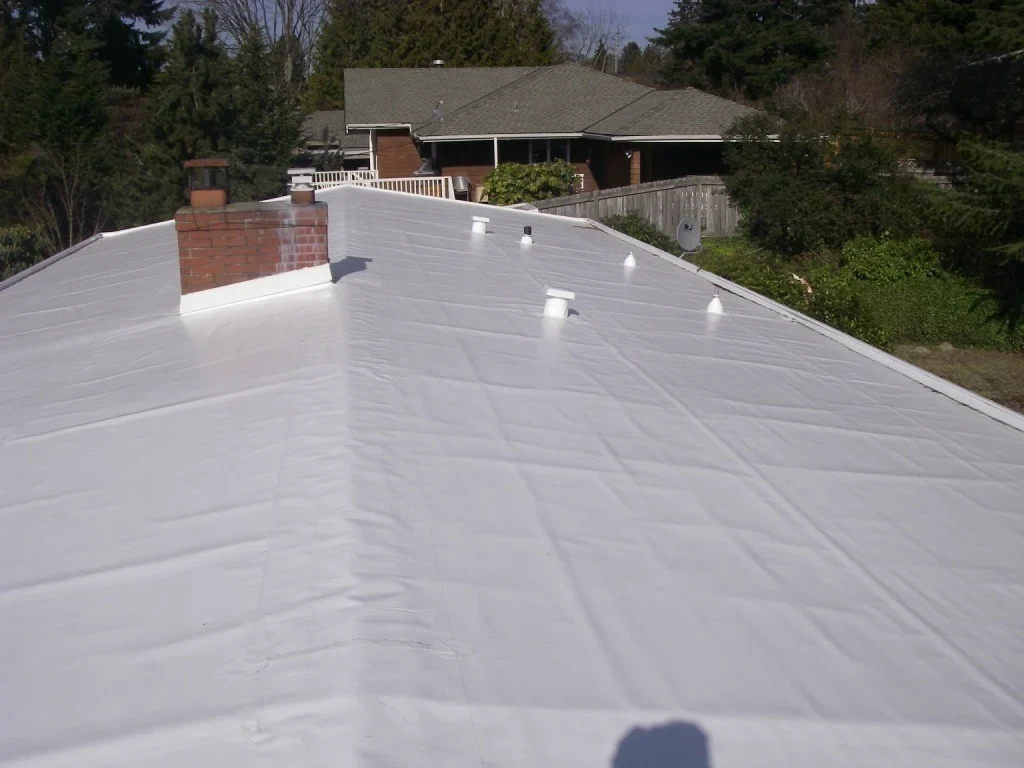
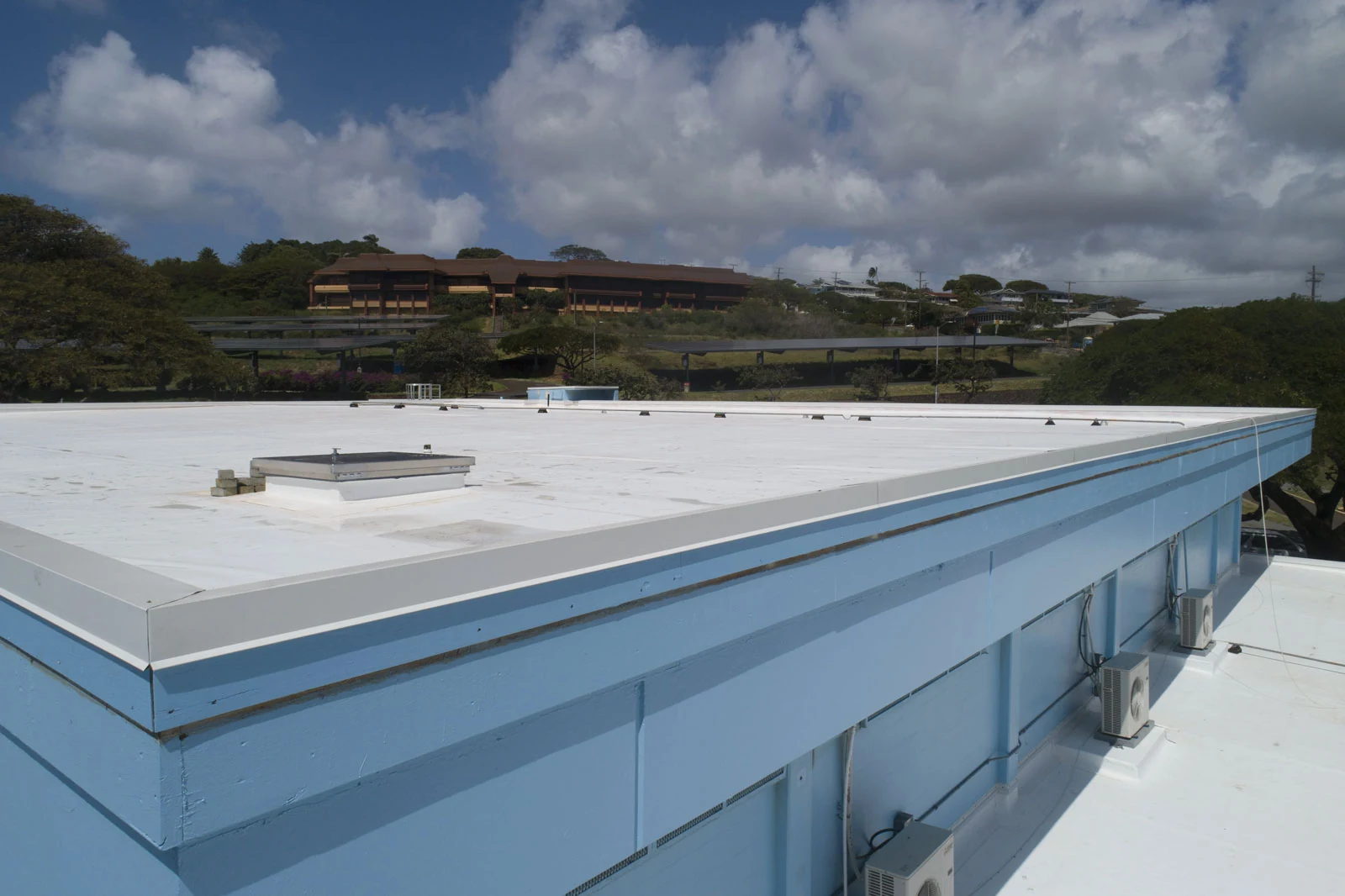
PVC and TPO look similar on a roll, but their chemistry behaves very differently around oils, greases, and certain chemical vapors. PVC resists that kind of exposure noticeably better, which is why we recommend it over TPO for buildings sitting near plant exhaust stacks, tank farms, or anywhere hydrocarbon vapor settles on the roof surface regularly. We have replaced TPO roofs near plant exhaust that degraded years ahead of schedule because the membrane was never a fit for that exposure in the first place.
PVC seams are also hot-air welded like TPO, and weld quality matters just as much here. A rushed weld on a PVC roof fails the same way a rushed TPO weld does, just under a different set of chemical stresses.
Where We See PVC Specified in This Market
The Westlake and Sulphur petrochemical corridor drives most of the PVC work we do, but it is not the only place it belongs. LNG-adjacent facilities toward Cameron and Hackberry, marine and port support buildings, and any building with kitchen exhaust or grease-heavy operations underneath the roof deck are all candidates worth considering PVC for, even when they are not technically inside a plant fence line.
Casino and hotel kitchens along the Vinton and Kinder gaming corridors fall into that same category more often than owners expect. A commercial kitchen exhaust system pushes years of grease-laden air across the roof deck above it, and a membrane that was never rated for that exposure ages faster than the rest of the roof around it, sometimes visibly so within a few years.
Plasticizer Migration and Gulf Heat
Older PVC formulations had a reputation for plasticizer migration, where the additives that keep the membrane flexible slowly leach out under sustained heat, leaving the membrane brittle years before it should be. That problem has largely been solved in current PVC formulations, but it is still worth asking any roofer bidding a PVC job which product line they are specifying, since not every formulation performs the same way after fifteen summers of Gulf Coast heat.
Fire Resistance Matters More Around Plant Facilities
PVC's inherent flame resistance is a real consideration for buildings near industrial operations, and it goes beyond something a sales sheet lists as a feature. For admin buildings, control rooms, and support structures close to process equipment, that fire performance is part of why PVC gets specified even where the chemical exposure argument alone would not settle the decision. Facility managers who have to answer to an on-site plant safety office tend to ask about fire performance before they ever ask about price.
- Chemical and hydrocarbon resistance near plant exhaust and tank farms
- Seam weld quality, checked and documented the same as any welded membrane
- Current-generation formulation to avoid plasticizer migration over time
- Fire resistance relevant to buildings near process equipment
- Flashing detail at roof penetrations, which run heavier on plant buildings
What a Bad PVC Install Looks Like Five Years Later
The failures we get called out to inspect on PVC roofs usually trace back to two things: a weld that was never probed properly, or a membrane exposed to more chemical stress than it was rated for. Neither shows up on install day. Both show up as a slow leak that gets blamed on the wrong cause until someone actually cuts into the membrane and checks the seam or the material condition underneath.
How We Approach a PVC Job
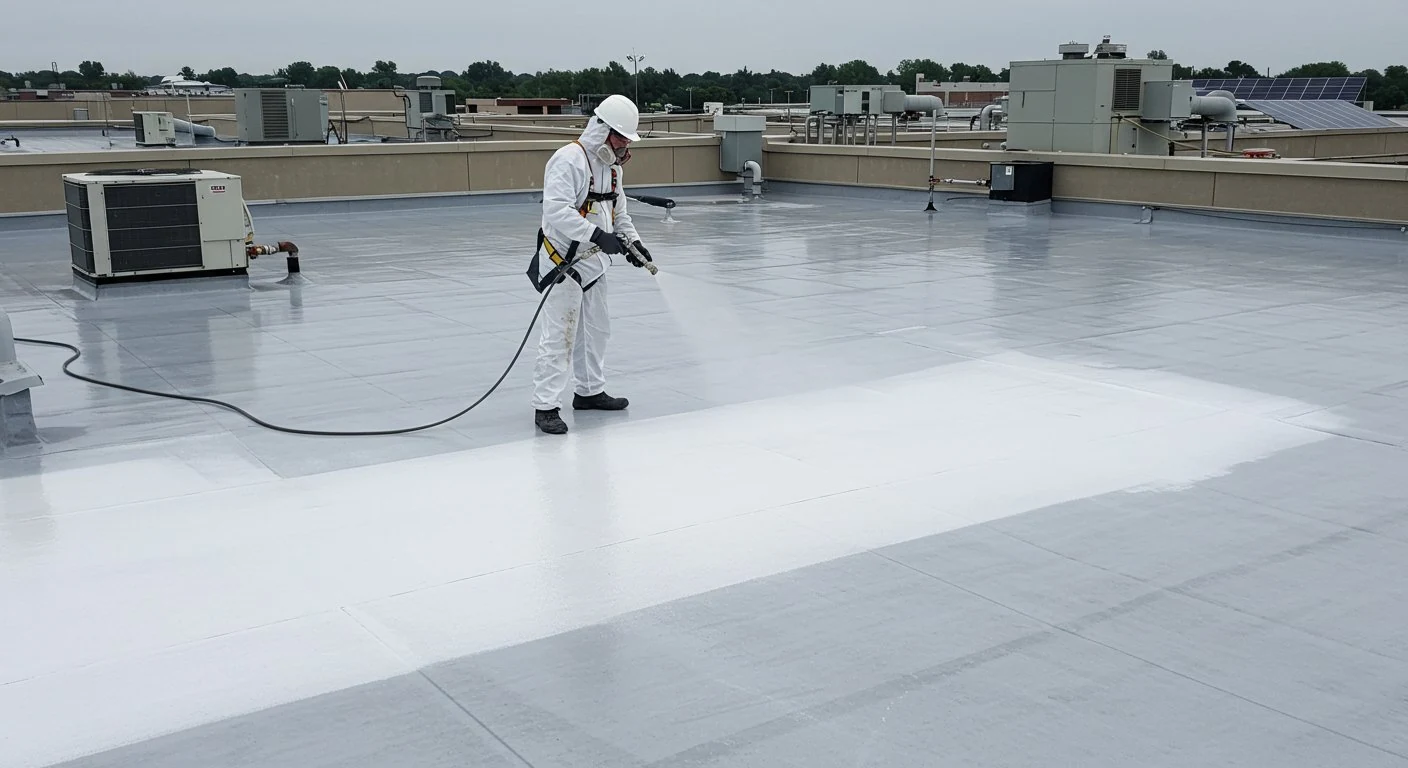
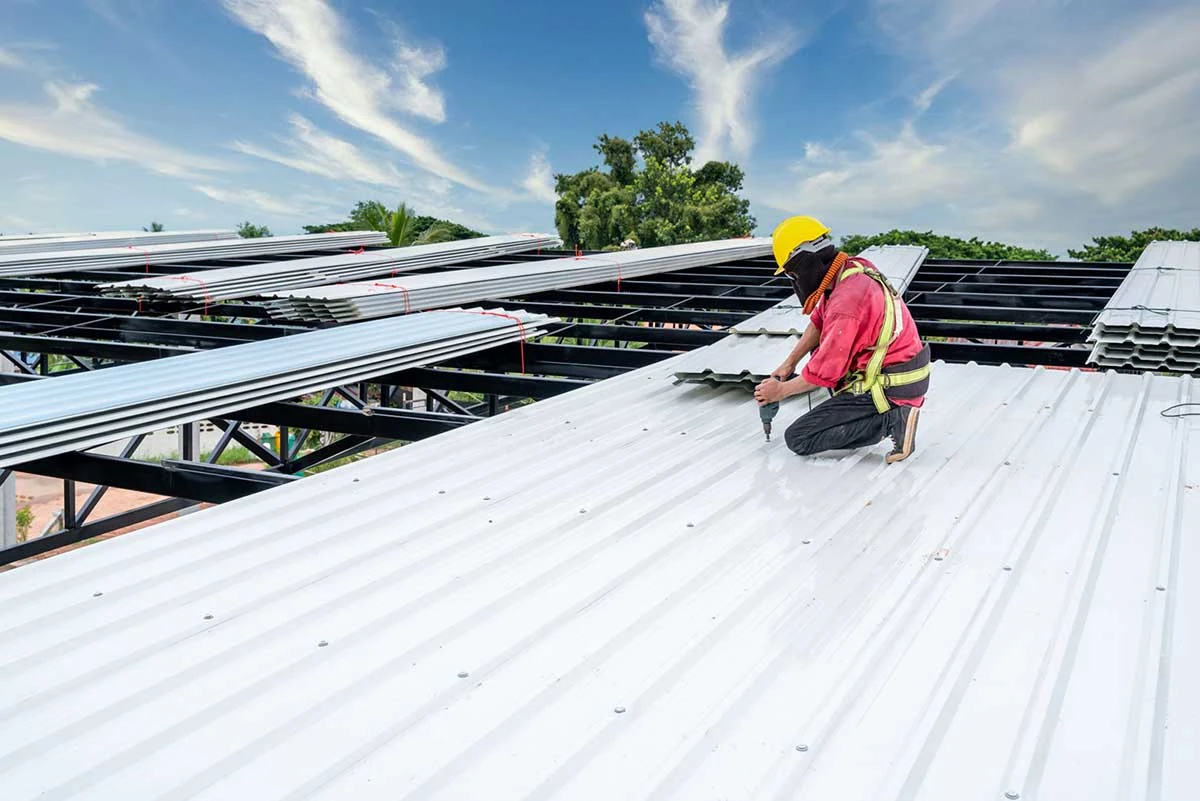
We start by confirming what is actually settling on the roof from nearby plant operations, since that determines whether PVC is even the right call over TPO or another system. From there we spec fastening for our wind zone the same way we would on any membrane roof here, and we document seam welds as they go down rather than trusting a visual pass at the end.
Questions We Get About PVC
Is PVC always better than TPO near a plant?
Not always, but often. If there is regular hydrocarbon, oil, or grease exposure near the roof, PVC handles it better. For a building without that exposure, TPO or another system may be the more cost-effective choice.
Does PVC cost significantly more than TPO?
Typically somewhat more, though the gap has narrowed. For buildings with real chemical exposure, the added service life usually justifies the difference.
Can PVC be installed over an existing roof?
It depends on the condition of the existing deck and insulation. If moisture has gotten in from a past storm or a slow leak, a recover just delays the real fix.
How do you know if a PVC membrane has plasticizer problems?
Brittleness and surface cracking well ahead of the expected service life are the main signs. We check for that during any inspection of an aging PVC roof.
Do you weld PVC seams the same way as TPO?
Yes, both use hot-air welding, and we inspect and document weld quality the same way on both membrane types.