Getting TPO Right on a Roof That Has to Survive the Next Named Storm
TPO has become the default recommendation for a lot of flat commercial roofs around Lake Charles, and it earns that spot on cost and heat performance. But after watching what Laura and Delta did to membrane roofs across this parish, we care more about how a TPO roof is fastened and welded than about the membrane brand printed on the roll.
Why TPO Fits a Gulf Coast Building
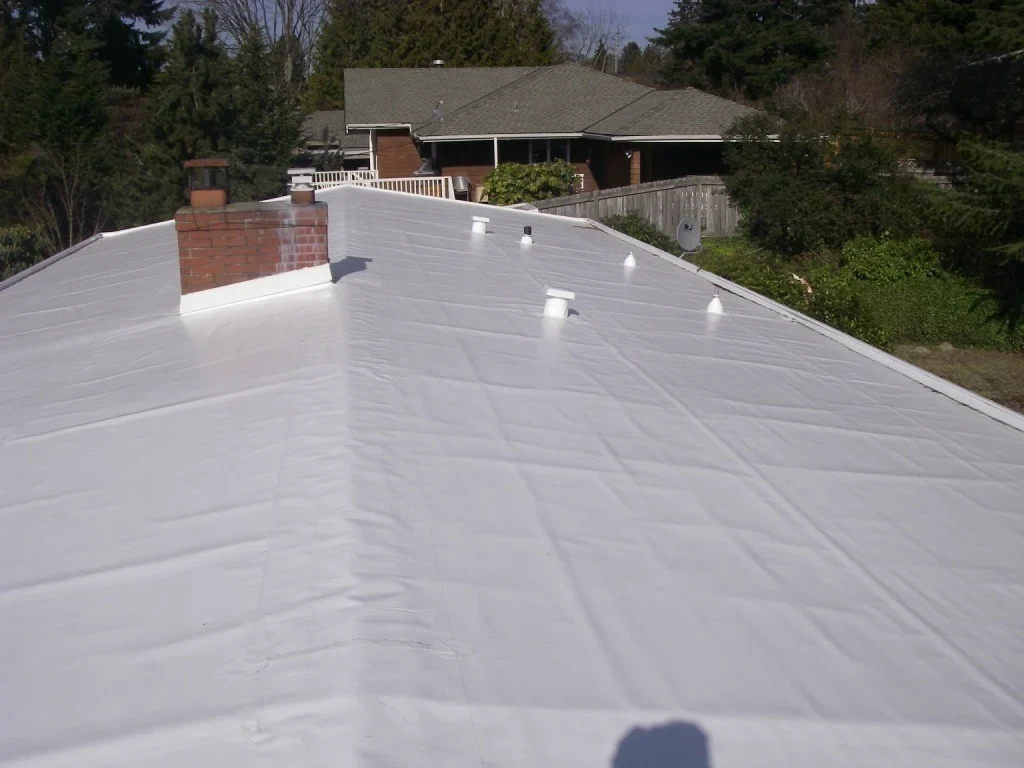
Between the heat off the Calcasieu Ship Channel and the direct sun on a flat plant office roof, surface temperatures on a summer afternoon get punishing. TPO's reflective white or light-colored surface handles that better than darker membranes, which matters for cooling costs on office buildings and for keeping rooftop mechanical units from overheating on warehouse and distribution roofs off I-10.
It also has to survive our humidity year-round, well beyond the occasional heat spike. TPO resists mold and algae growth better than some older membrane types, which matters given how much moisture sits in the air here most months. On a plant admin building or a casino service wing with air handlers pulling that humid air across the roof deck constantly, membrane selection affects more than the surface temperature reading.
The Decision That Actually Matters: Fastening Pattern Over Membrane Brand
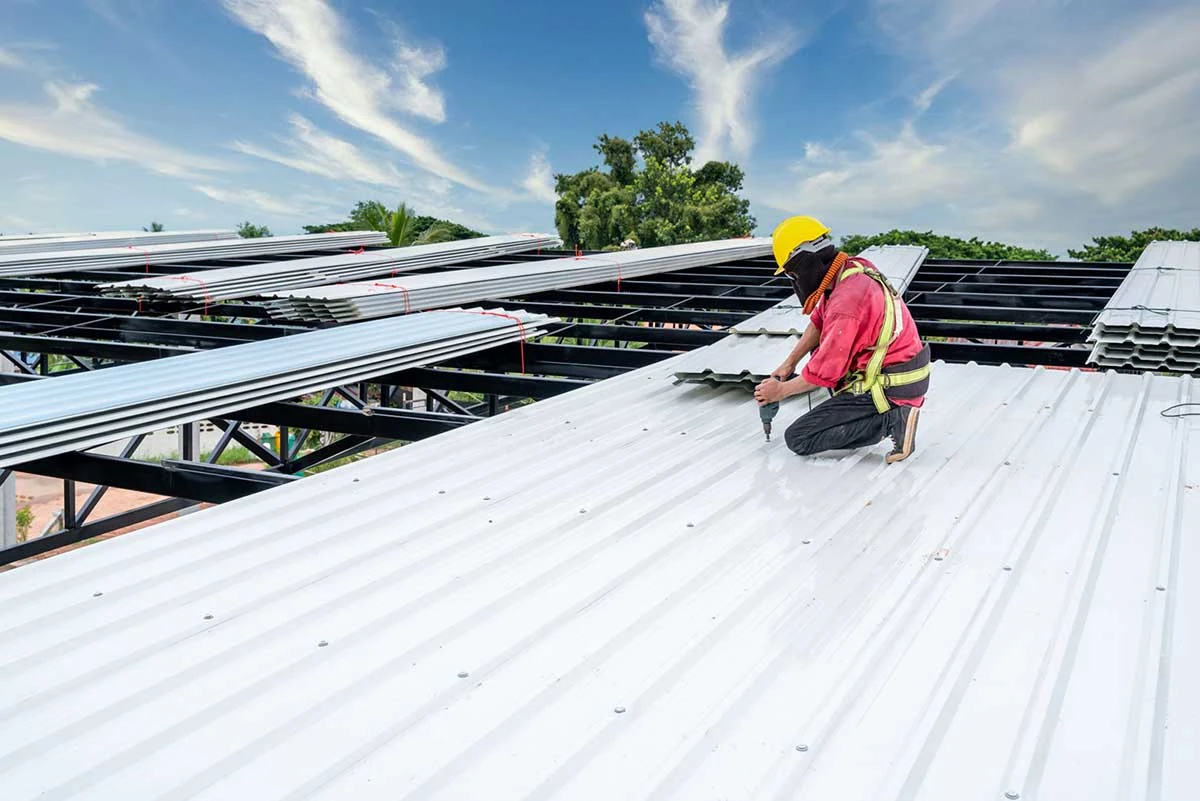
Mil thickness gets most of the attention in a TPO sales conversation, and it matters, but the fastening pattern and perimeter attachment matter more in this wind zone. After Laura, we saw TPO roofs that lost whole sections not because the membrane failed but because the fastening pattern was spaced for a lower wind zone than what Southwest Louisiana actually requires. We calculate fastening density and perimeter and corner zones against current wind uplift requirements for this parish, not a generic national spec.
Membrane thickness still matters for roofs with regular foot traffic. A distribution building or plant support roof with maintenance crews walking mechanical units is a worse candidate for the thinnest membrane option than a rarely-accessed office roof, even though both are flat.
Seam Welding Is Where Most TPO Roofs Actually Fail
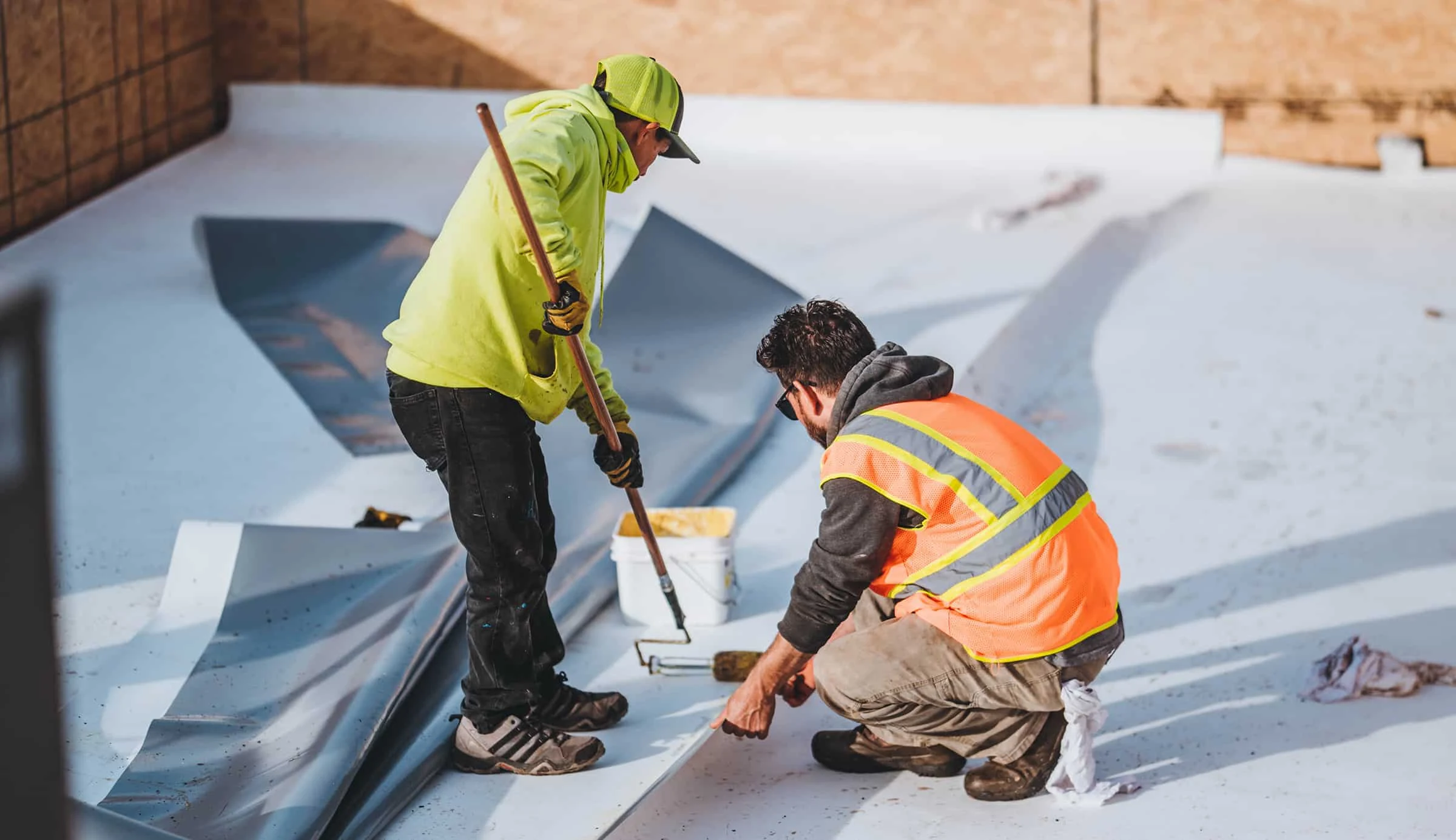
TPO seams are hot-air welded, and a rushed weld looks fine on install day and opens up within a season or two of Gulf humidity and wind cycling. We probe and document seam welds as part of every job, because that is the part of a TPO install nobody checks again once the roof is closed up and the crew is gone.
We also pay close attention to flashing at parapets, curbs, and roof penetrations, since those transitions take more movement stress in high wind than the flat field of the membrane does.
Where a Bad TPO Install Costs You Later
A poorly welded seam or an under-fastened perimeter zone rarely fails on a calm day. It fails during the next tropical system, and by the time an owner notices a ceiling stain inside a casino corridor or a plant office, water has usually already spread further than the visible leak suggests. That is the real cost of a rushed TPO install: not the membrane price, but the repair bill that shows up during the next storm season.
- Fastening pattern matched to current wind uplift zones, not a generic spec
- Seam weld quality checked and documented with a probe, beyond a surface glance
- Membrane thickness matched to roof traffic and rooftop equipment
- Flashing detail at parapets, curbs, and penetrations
- Drainage slope so water clears the membrane instead of ponding
How We Approach a TPO Job in This Market
We start with the roof deck and insulation condition, especially on any building that took on water during a past storm, since covering a damp deck with new membrane just delays a worse problem. We map penetrations before crews mobilize, and we set a wind-zone-appropriate fastening plan before ordering material, not after.
We tell owners plainly when TPO is not the right call. If a deck needs drying out first, or if a building's exposure to plant chemicals or grease points toward PVC instead, we say so rather than quoting the easier sale. That conversation matters more here than in a lot of markets, because a fair share of the flat roofs we look at sit within smelling distance of a refinery flare or a tank farm, and the wrong membrane choice shows up as a maintenance problem within a few years instead of holding for its full expected life.
On new construction, we also coordinate directly with the general contractor's schedule so the membrane goes down during a dry stretch that gives adhesive and welds enough time to cure before the next rain system moves through. Rushing that cure window is one of the more common ways a brand-new TPO roof ends up with soft spots at the seams within its first year.
What Owners Ask About TPO Here
Will TPO hold up in another Laura-strength hurricane?
A properly fastened and welded TPO roof, specified to current wind zone requirements for this parish, performs far better than one installed to a lower or generic wind spec. The membrane rarely fails first; the fastening pattern and edge detail usually do.
How long should a TPO roof last in Lake Charles?
Service life depends heavily on fastening design, seam quality, and roof traffic. A well-installed, properly welded TPO roof should substantially outperform a rushed one regardless of the warranty paperwork.
Is TPO a good fit for a plant support building near chemical exposure?
Sometimes. It depends on what is happening near the roof deck. Regular exposure to oils, solvents, or exhaust changes the calculus, and we look at each building before recommending TPO over PVC for that kind of exposure.
Can TPO go over an existing roof instead of a full tear-off?
It depends on the moisture condition of what is underneath. If the deck and insulation are dry, a recover can work. If there is trapped moisture from a past storm, covering it just delays a bigger repair.
Does TPO handle hail as well as other membranes?
Thicker TPO holds up reasonably well, but no single-ply membrane is hail-proof. Thickness is one factor among several, alongside fastening and seam quality, in how a roof performs during a hail event.